
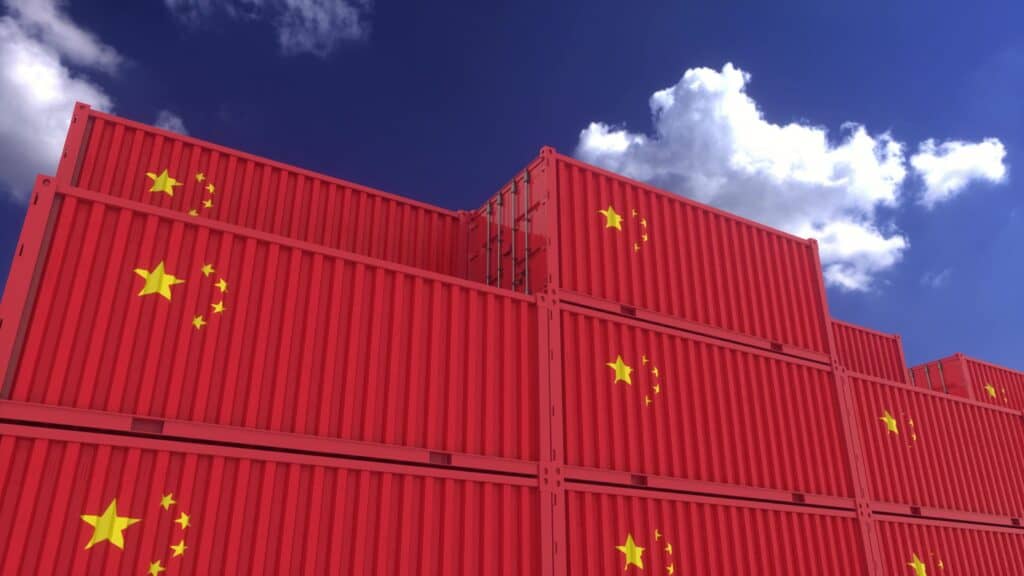
The Sourcing in China is a fixed part of the purchasing strategy for many medium-sized companies. The country offers a high level of industrial depth, competitive cost structures and enormous production capacity. At the same time, the Chinese sourcing market remains complex, dynamic and difficult to understand in many respects. Mistakes rarely arise from negligence. They are often the result of false assumptions, insufficient information or cultural misunderstandings that lead to quality problems, delivery failures or financial damage in the long term.
This article highlights five typical mistakes that purchasing managers and product managers repeatedly make in sourcing in China. The analysis is based on real case scenarios from various industries, anonymized and objectively classified. The aim is to better understand risks and enable more informed decisions.
Mistake 1: Supplier selection based on price and self-disclosure
The problem
A common starting point in sourcing in China is the search for the lowest possible supplier price. Platforms, trade fair contacts or direct inquiries quickly provide offers, often supplemented by professional company profiles, certificates and reference lists. What is often missing is an independent verification of whether the provider is actually a manufacturer, what capacities they have and how stable their processes are.
In China, it is not uncommon for trading companies to present themselves as manufacturers or to flexibly purchase production capacities. For foreign buyers, this distinction is hardly possible without local verification. The lowest price says little about actual delivery capability.
Practical example
A medium-sized manufacturer of household appliances sources plastic housings from China. The selected supplier impresses with a very competitive price and refers to ISO certifications as well as well-known reference customers. After several successful samples, significant delays occur during the start of series production. Only on site does it become apparent that the supplier does not operate its own injection molding production, but instead passes orders on to changing subcontractors at short notice. Quality deviations and scheduling problems are the result.
Recommendation
Companies should not base supplier selection solely on quotations and digital communication. A structured on-site inspection, ideally before contract conclusion, is crucial. This includes verification of the production facility, discussions with management, insight into real production processes and an assessment of organizational maturity. Price is a relevant factor, but should never be the sole decision criterion.
Mistake 2: Unclear specifications and implicit assumptions
The problem
Many buyers assume that technical drawings, bills of materials or samples are sufficient to clearly define a product. In practice, however, much remains unspoken. Tolerances, materials, surface qualities or packaging requirements are taken for granted. In sourcing in China, this assumption regularly leads to deviations, as suppliers strictly adhere to what has been explicitly agreed.
In addition, Chinese suppliers rarely ask questions proactively when there are ambiguities. Deviations often only become visible upon receipt of the goods.
Practical example
A European supplier of technical assemblies orders metal components according to an existing drawing. The delivered parts formally meet the dimensions but show a different surface treatment than expected. Corrosion problems occur after a short time. The supplier points out that the desired coating was never specified in writing and therefore a more cost-effective variant was chosen.
Recommendation
Specifications should be documented as completely and clearly as possible. In addition to drawings, this includes material requirements, standards, test methods, packaging details and acceptance criteria. Written agreements are essential. Sample approvals should be documented and defined as a binding reference standard. The less room for interpretation remains, the lower the risk of later deviations.
Mistake 3: Waiving ongoing quality inspections during production
The problem
A widespread misconception is the assumption that a successful sampling phase automatically guarantees stable series quality. In reality, production conditions in Chinese factories change frequently. Staff turnover, material substitutions or parallel orders from other customers affect quality. Without accompanying inspections, these changes remain unnoticed.
Many companies rely exclusively on a final inspection before shipment or completely forgo inspections in order to save costs. Errors are then only discovered once the goods have already arrived in the destination country.
Practical example
A medium-sized importer of electrical accessories receives several deliveries with flawless quality. In a later batch, increased failure rates occur. A subsequent investigation shows that the supplier used an alternative component for cost reasons. The change was not communicated, as it appeared functionally equivalent from the supplier’s perspective.
Recommendation
quality assurance should be understood as a continuous process. In sourcing in China, random inspections before and during ongoing production are also sensible. They make it possible to identify deviations at an early stage and take corrective action before larger quantities are affected. The effort is manageable compared to the costs of recalls, rework or production downtime.
Mistake 4: Underestimating cultural and communication differences
The problem
Business relationships in China follow different rules than in Europe. Communication is often more indirect, criticism is avoided and commitments are more likely understood as statements of intent. Many misunderstandings arise because Western buyers take statements literally without considering the context.
A common example is the word yes. In many cases, it merely means that the information was understood, not necessarily that a requirement is actually feasible.
Practical example
A product manager asks a supplier whether a delivery date can be met. The answer is yes, no problem. Shortly before the planned shipment, it becomes clear that production has not yet been completed. Internally, the supplier had doubts but did not want to jeopardize the order and hoped to make up for the delay internally.
Recommendation
Successful sourcing in China requires a clear understanding of cultural differences. Structured communication, written summaries and regular status checks are important. Critical points should be addressed explicitly and supported with clear milestones. Personal presence or local contacts help to correctly interpret signals and identify problems at an early stage.
Mistake 5: Lack of risk management and insufficient alternatives
The problem
Many companies build their sourcing in China around a small number of suppliers in order to bundle volumes and optimize prices. This strategy involves risks. Political tensions, regulatory changes, local production disruptions or financial problems of individual suppliers can disrupt the supply chain at short notice. Without alternatives, the ability to act is lost.
Often, the topic of risk management only becomes relevant when it is already too late.
Practical example
A medium-sized company sources a key product component exclusively from a supplier in southern China. Due to tightened environmental regulations, production is restricted at short notice. Deliveries are delayed for weeks. As no qualified alternative suppliers exist, customer orders have to be postponed and contractual penalties accepted.
Recommendation
Systematic risk management is an essential part of professional sourcing in China. This includes assessing dependencies, establishing secondary suppliers and continuous market monitoring. Geographic diversification within China or additionally in other Asian countries can also be sensible. The goal is not maximum complexity, but controlled stability.
Conclusion
Sourcing in China continues to offer significant opportunities for medium-sized companies. At the same time, it requires a high level of preparation, structure and realistic risk awareness. The mistakes described are not exceptions, but are widespread in practice. However, they can be avoided if companies are willing to invest time and resources in analysis, communication and control.
ASIAPRO has been supporting international sourcing projects in China for many years and closely monitors developments on the ground. For companies that want to reflect on their existing structures or professionally assess specific questions related to sourcing in China, a non-binding exchange can open up new and valuable perspectives.