



Product development is often presented as a creative act. A spark of inspiration, a prototype, a launch, applause. In reality, especially in product development in China, it is a structured operational discipline. It is a chain of decisions where every weak link quietly compounds risk. If you want to develop a new product and move it successfully from idea to product to market, you need more than a supplier and a purchase order. You need a clearly defined product development process, experienced product development services in China and, above all, ownership.
China has become the global center of the manufacturing sector not because it is inexpensive, but because it is fast, dense and technically capable. Industrial hubs such as Guangzhou offer access to tooling, component sourcing, engineering support and mass production within tightly integrated clusters. This environment allows companies to streamline development cycles dramatically. However, speed without structure creates expensive chaos. Product development in China rewards clarity and punishes vagueness. The system will always optimize for something. The question is whether it optimizes for your market strategy or merely for factory convenience.
The following guide explains, in practical terms, how product development works in China, where the real pitfalls lie, why ownership is decisive and how structured product development services turn complexity into competitive advantage.
1. Product Development as a System, Not an Event
Product development is not a milestone. It is a system composed of specification, sourcing, engineering validation, intellectual property protection, supply chain coordination and quality control. Many companies treat product development as a phase before “real business” begins. In reality, it is the foundation of everything that follows. A weak product development process cannot be compensated by marketing brilliance.
When you develop a product in China, the first step is internal clarity. Define functional requirements, material specifications, tolerances, compliance standards and cost targets before you contact a supplier. Document your intended timeline, development cycle milestones and expected product to market date. Without this structure, your supplier will interpret your ambition through the lens of manufacturability, not market differentiation.
Professional product development services formalize this stage. They translate business intent into engineering documentation. They align product design with production logic. They ensure that your development team is not improvising but executing within a defined framework.
2. Importance of Clear Specifications
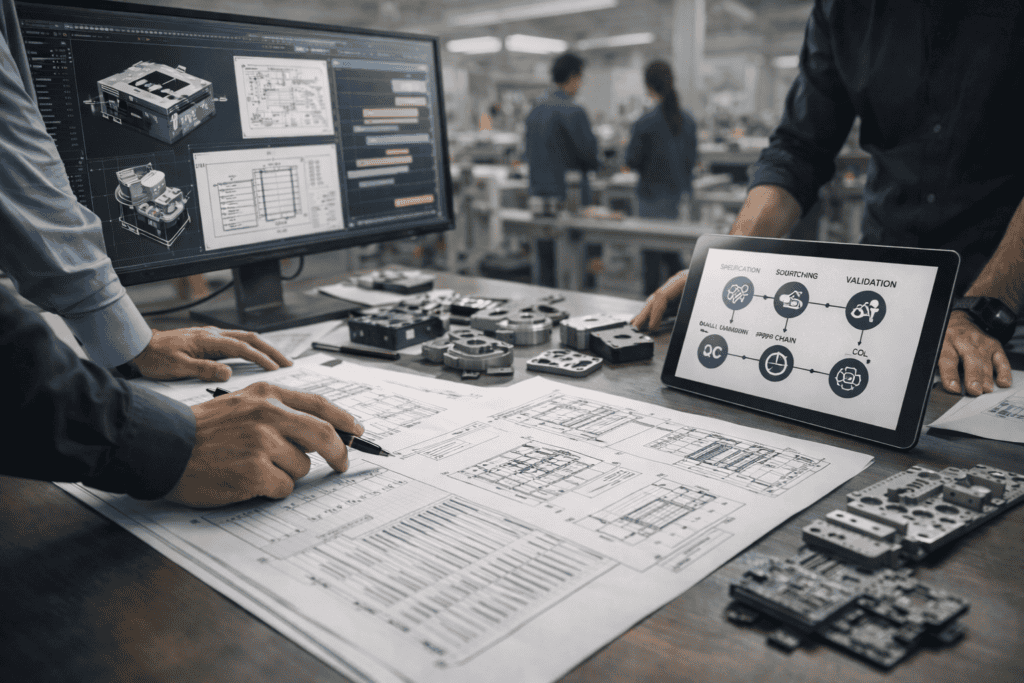
The process begins long before tooling is cut. It begins with a specification document that leaves little room for interpretation. Ambiguity is expensive. If you provide approximate dimensions or vague performance expectations, you will receive approximate results.
Concrete measures include developing a detailed product requirement specification, defining measurable acceptance criteria and preparing CAD files with version control. During china product development, every design revision should be documented and traceable. Version confusion between engineering teams and suppliers is one of the most common causes of rework.
Ownership at this stage means you control documentation. You do not allow verbal confirmations to replace written agreements. A clearly defined specification reduces development cycle volatility and shortens time to market.
3. Strategic Supplier Selection
To source a supplier in China is simple. To select the right supplier for product development in China is complex. Supplier selection must be treated as an engineering decision rather than a procurement exercise.
Evaluate suppliers based on process capability, tooling expertise, quality control systems, production capacity and experience with similar new product categories. Request production flow charts and audit reports. Ask how they integrate design for manufacturing into their product development process.
Professional product development services in China perform structured supplier audits. They assess not only current capabilities but scalability potential for mass production. A supplier who can produce an impressive prototype may not have the discipline required for stable high volume output. Ownership in supplier selection prevents dependency on unsuitable partners.
4. Structured Design for Manufacturing
Design for manufacturing, often abbreviated as DFM, is the silent driver of profitability in product development. When you develop a product in China, DFM ensures that the product is not only functional but reproducible at scale.
During DFM review, analyze component count, assembly complexity, tolerance alignment and material substitution options. Each unnecessary component increases production risk. Simplifying assembly processes improves reliability and reduces defect rates during mass production.
Practical implementation involves structured DFM workshops with the supplier’s engineering team. Review CAD models together. Identify stress points and production constraints. Refine the design before tooling begins. Product development services integrate DFM early to avoid costly post tooling corrections.
Ownership here means refusing to approve a design simply because it works once. It must work ten thousand times consistently.
5. Prototype Strategy within the Product Development Process
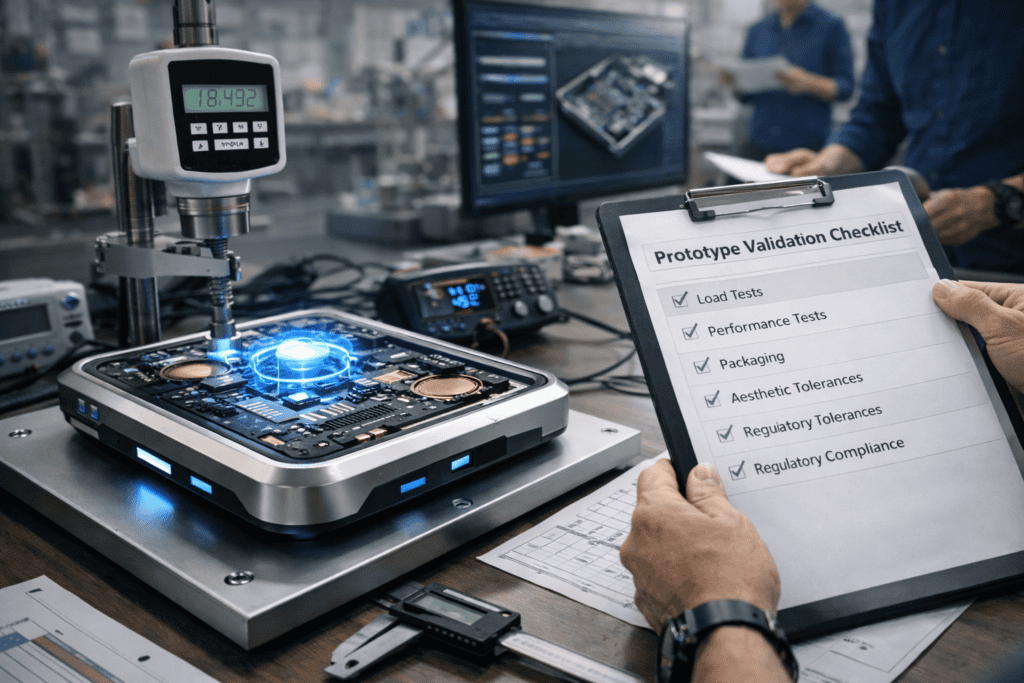
The prototype stage in product development in China is a validation phase, not a ceremonial achievement. Before building a prototype, define measurable validation criteria. Specify load tests, performance thresholds, packaging durability and aesthetic tolerances.
Document deviations meticulously. Each prototype iteration should eliminate uncertainty rather than introduce new variables. A disciplined product development process anticipates multiple iterations and allocates timeline buffers accordingly.
One common pitfall in china product development is approving prototypes based on visual satisfaction rather than functional verification. Ensure your product meets mechanical and regulatory requirements before progressing toward mass production.
Product development services provide structured evaluation checklists and testing protocols, transforming prototypes into data driven milestones.
6. Intellectual Property and IP Protection
Intellectual property protection must be embedded within product development in China from the outset. Protect your intellectual property before mass production begins, not after market entry.
Concrete actions include registering trademarks and design patents in China, drafting enforceable manufacturing agreements and limiting distribution of full technical documentation when feasible. Intellectual property ownership clauses should clearly define design rights and tooling ownership.
IP protection is not paranoia. It is structural risk management. In the Chinese market, clarity and enforceability create mutual respect. Professional product development services in China integrate IP protection into sourcing and supplier agreements.
Ownership here means active oversight. Contracts must be supported by monitoring production volumes and supply chain transparency.
7. Sourcing, Procurement and Supply Chain Reliability
Sourcing extends beyond selecting a single supplier. It involves mapping the entire supply chain, identifying critical components and assessing dependency risks.
Evaluate whether key parts rely on single source suppliers. Assess raw material availability and price volatility. Define procurement strategies that include long term pricing tiers and contingency suppliers.
Supply chain reliability is built before scaling. China has become synonymous with scalability, but capacity planning is essential. Request production capacity data. Understand how your orders fit within existing production schedules.
Professional sourcing agents and product development services conduct supply chain audits and risk assessments. Ownership ensures that scaling production does not compromise reliability.
8. Quality Control as an Integrated Development Function
Quality control should not be treated as a final inspection checkpoint. In product development in China, quality control must be integrated into the product development process from the engineering stage onward.
Define acceptable quality limits, inspection methods and testing protocols before mass production begins. Implement pre production sample approval and in line inspection procedures. Ensure alignment between technical documentation and inspection criteria.
Mass production amplifies minor deviations. A small tolerance misalignment in a prototype can become a systemic defect across thousands of units. Ensure your product meets standards through preventive control systems rather than reactive inspection.
Professional product development services design quality control frameworks that align supplier processes with your brand requirements.
9. Timeline Management and Streamline the Development Cycle
One of the key advantages of the development in China is speed. Industrial clusters, especially in regions such as Guangzhou, enable rapid tooling, component sourcing and assembly coordination. China has become a hub for companies aiming to bring products to market quickly.
However, to streamline the development cycle effectively, timeline coordination must be precise. Align prototype approval, tooling production, procurement scheduling and pilot runs. Incorporate buffer time for iteration and tooling refinement.
Common pitfalls include unrealistic launch deadlines and insufficient buffer allocation. Controlled acceleration is preferable to rushed compromise. Product development services in China help synchronize these milestones, protecting both speed and reliability.
Ownership in timeline management means resisting the temptation to compress phases that require engineering validation.
10. Development Team Structure and Cross Cultural Collaboration
A capable development team is central to successful product development in China. Cross cultural collaboration requires precision in documentation and communication. Avoid reliance on verbal confirmations. Implement written change logs and version controlled CAD files.
Schedule structured milestone reviews and require documented approval for each revision. In the Chinese market, clarity reduces interpretation risk. Suppliers respond efficiently when expectations are explicit.
Product development services often act as an extension of your internal development team, bridging cultural and technical gaps. Ownership ensures that communication remains proactive rather than reactive.
11. Risk Mapping Before Mass Production
Before entering mass production, conduct a structured risk analysis. Identify single source dependencies, tooling wear risks, logistics bottlenecks and compliance vulnerabilities. Create a risk matrix with probability and impact ratings.
Develop mitigation strategies for high impact risks. Consider dual sourcing for critical components. Verify tooling maintenance schedules. Confirm logistics timelines and customs documentation requirements.
Product development in China becomes predictable when risks are mapped and managed proactively. Ignoring risk does not eliminate it; it postpones its visibility.
Professional product development services in China integrate risk mapping into the final pre production review phase.

12. From China Product Development to Sustainable Product to Market Execution
Product development does not conclude when mass production begins. To bring products to market sustainably, align packaging standards, compliance documentation, labeling regulations and inventory planning with production output.
China has become a launchpad for global product to market strategies. Yet acceleration without coordination creates inventory misalignment and regulatory delays. Ensure that logistics planning, demand forecasting and supply chain scaling are synchronized with production capacity.
A mature product development process extends beyond engineering. It connects sourcing, intellectual property protection, quality control and commercial planning into a unified system.
Conclusion: Ownership as the Decisive Advantage in Product Development in China
Product development in China is neither inherently risky nor automatically efficient. It is a powerful system that rewards structured execution. If you define specifications clearly, integrate DFM early, protect intellectual property proactively, qualify suppliers beyond price, stabilize supply chain reliability, implement preventive quality control and manage timelines realistically, you transform complexity into leverage.
Professional product development services provide the structure necessary to execute within this dynamic manufacturing sector. Ownership ensures that decisions remain aligned with your strategic objectives rather than drifting toward short term convenience.
When you approach product development in China with disciplined ownership, you do not merely develop a new product. You build a scalable capability that consistently moves products to market with reliability, clarity and competitive strength.
Improvisation may feel dynamic. Systems create sustainable advantage. In global manufacturing, sustainable advantage wins.





 Deutsch
  English (UK)
  Français
  Italiano
  Polski
  Português do Brasil
  Español